Enclosures · · 6 min read
An electrical enclosure has one job: protect what is inside it. Meters, breakers, control boards and terminals are expensive, and the people who work on them need to stay safe. Yet enclosures are often chosen on price alone, and the wrong choice shows up later as rust, cracked housings, water ingress, faded and brittle plastic, or a shock hazard.
There are three main material families for electrical enclosures: metal (painted steel, stainless steel or aluminum), thermoplastic (such as ABS or polycarbonate), and fiberglass-reinforced polyester (FRP/GRP). Each has its place. This guide explains the differences so you can choose the right one for your project.
Start with the environment, not the price
Before comparing materials, answer four questions about where the enclosure will live:
- 01Indoors or outdoors? Outdoor enclosures face sun, rain, dust and temperature swings.
- 02How aggressive is the atmosphere? Coastal air, industrial fumes, fertilizers, sewage plants and chemical sites attack many materials.
- 03What protection level is needed? This is expressed as an IP rating (explained below).
- 04Who will access it, and how often? Maintenance staff, the public, or potential vandals?
The answers usually point clearly to one material.
Option 1: Metal enclosures
Painted mild steel is the traditional choice. It is strong, widely available and inexpensive to buy. Its weakness is corrosion: once the paint is scratched or chipped, rust starts, especially outdoors or near the sea. Steel is also electrically conductive, so it must be properly earthed, and that earth connection must be maintained for the life of the installation.
Stainless steel solves most of the corrosion problem and looks premium, but it is significantly more expensive, heavy, and still conductive. Aluminum is lighter but can corrode in salty or alkaline conditions.
Option 2: Thermoplastic enclosures
Plastic enclosures made of ABS or polycarbonate are light, inexpensive at small sizes, and non-conductive. They work well for small junction boxes and indoor equipment.
Their limitations appear outdoors and at larger sizes. Many thermoplastics degrade under UV, becoming discolored and brittle after a few years in direct sun. They soften at higher temperatures, can deform under the weight of heavy equipment, and large plastic boxes can lack rigidity. Impact resistance also falls as the material ages.
Option 3: Fiberglass (FRP) enclosures
Fiberglass enclosures combine the strengths of the other two. Made by compression molding SMC (glass fiber, thermoset resin and mineral fillers) under heat and pressure, they deliver:
- Total corrosion resistance. No rust, ever. FRP is unaffected by humidity, salt air and most industrial chemicals.
- Electrical insulation. FRP is non-conductive. Even if a live cable touches the housing, the enclosure does not become live. This greatly reduces shock risk and simplifies earthing requirements.
- UV and weather stability. Properly formulated SMC is designed for long-term outdoor exposure without becoming brittle.
- Wide temperature range. SARACO enclosures are designed for service from -40°C to +120°C, far beyond what most thermoplastics can handle.
- Strength and rigidity. Thermoset composites do not soften with heat and hold their shape under heavy internal equipment.
- Light weight. FRP enclosures are typically 60 to 70% lighter than equivalent metal enclosures, which makes transport, handling and wall or pole mounting much easier.
- Maintenance-free. No repainting, no rust treatment, no re-earthing of the housing.
- Fire performance. SMC can be formulated with flame-retardant and self-extinguishing properties.
Side-by-side comparison
| Property | Painted steel | Stainless steel | Thermoplastic | Fiberglass (FRP) |
|---|---|---|---|---|
| Corrosion resistance | Poor once paint is damaged | Very good | Good | Excellent |
| Electrically insulating | No | No | Yes | Yes |
| UV resistance outdoors | Good (paint fades) | Excellent | Often poor | Very good |
| High-temperature stability | Excellent | Excellent | Limited | Very good |
| Weight | Heavy | Heavy | Very light | Light |
| Rigidity at large sizes | Excellent | Excellent | Limited | Very good |
| Maintenance | Repainting, earthing checks | Low | Low, but ages | Very low |
| Purchase price | Low | High | Low (small sizes) | Medium |
Understanding IP ratings
The IP (Ingress Protection) rating tells you how well an enclosure keeps out solids and water. It has two digits: the first for dust and solids, the second for water.
- IP54: protected against dust that could harm equipment, and against splashing water from any direction. Suitable for sheltered outdoor and industrial indoor use.
- IP65: fully dust-tight, and protected against water jets. Suitable for most outdoor installations.
- IP67: fully dust-tight, and protected against temporary immersion in water. Suitable for flood-prone or wash-down areas.
SARACO enclosures are available in IP54, IP65 and IP67 configurations, depending on the gasket, door and opening design. One important note: every cable entry or cut-out you add must be sealed correctly to keep the rating, which is why we recommend having openings machined and sealed at the factory.
The hidden cost of a cheap enclosure
A steel box that costs less on day one can become the expensive option within a few years once you add repainting, replacing rusted doors and hinges, re-earthing, and the cost of equipment damaged by water ingress. Outdoors, a thermoplastic box may need to be replaced entirely once UV makes it brittle.
For utilities installing thousands of meter boxes, or contractors responsible for an installation's long-term performance, these costs multiply quickly. Over its life, a fiberglass enclosure is usually the lowest-cost choice.
Custom, not just catalog
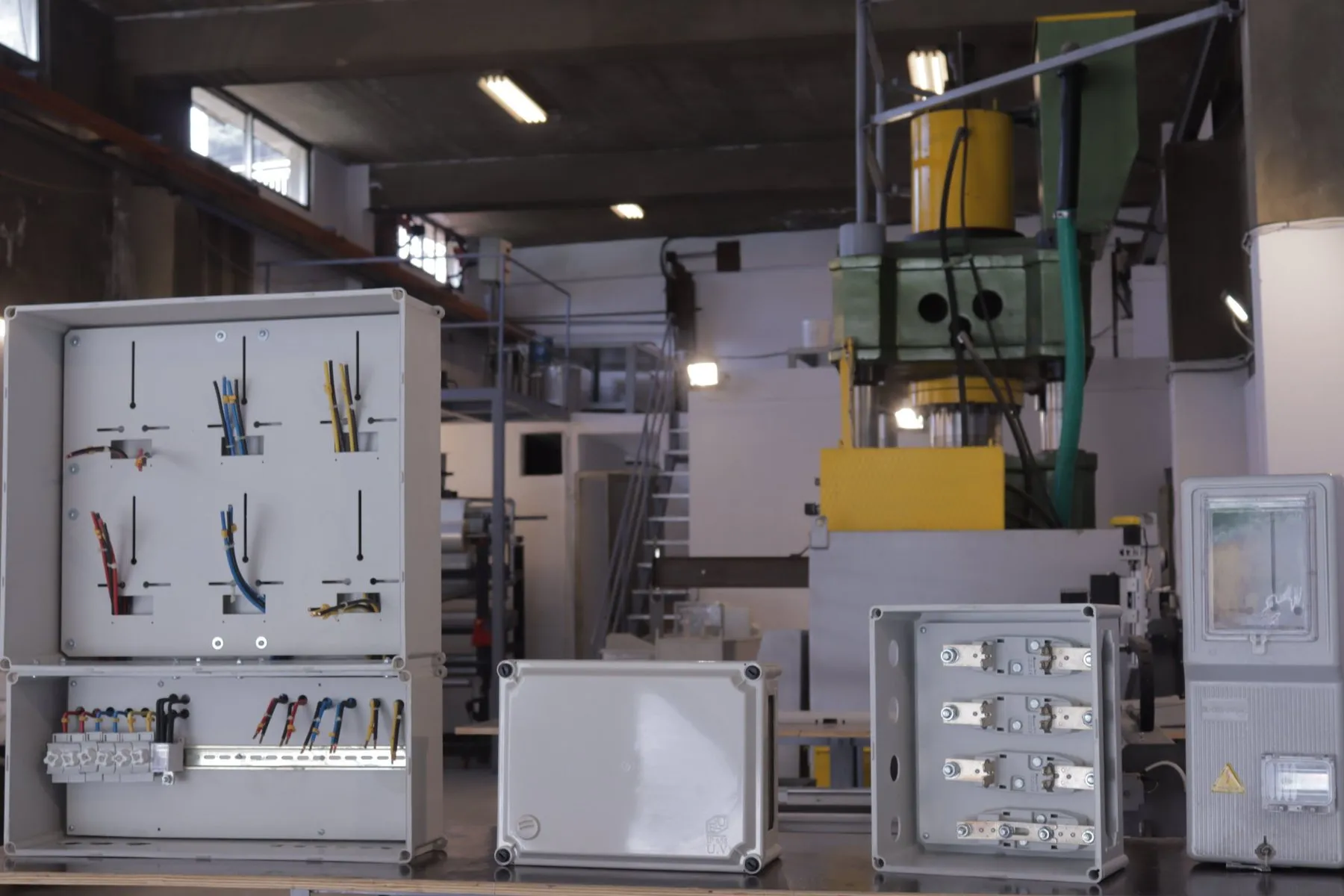
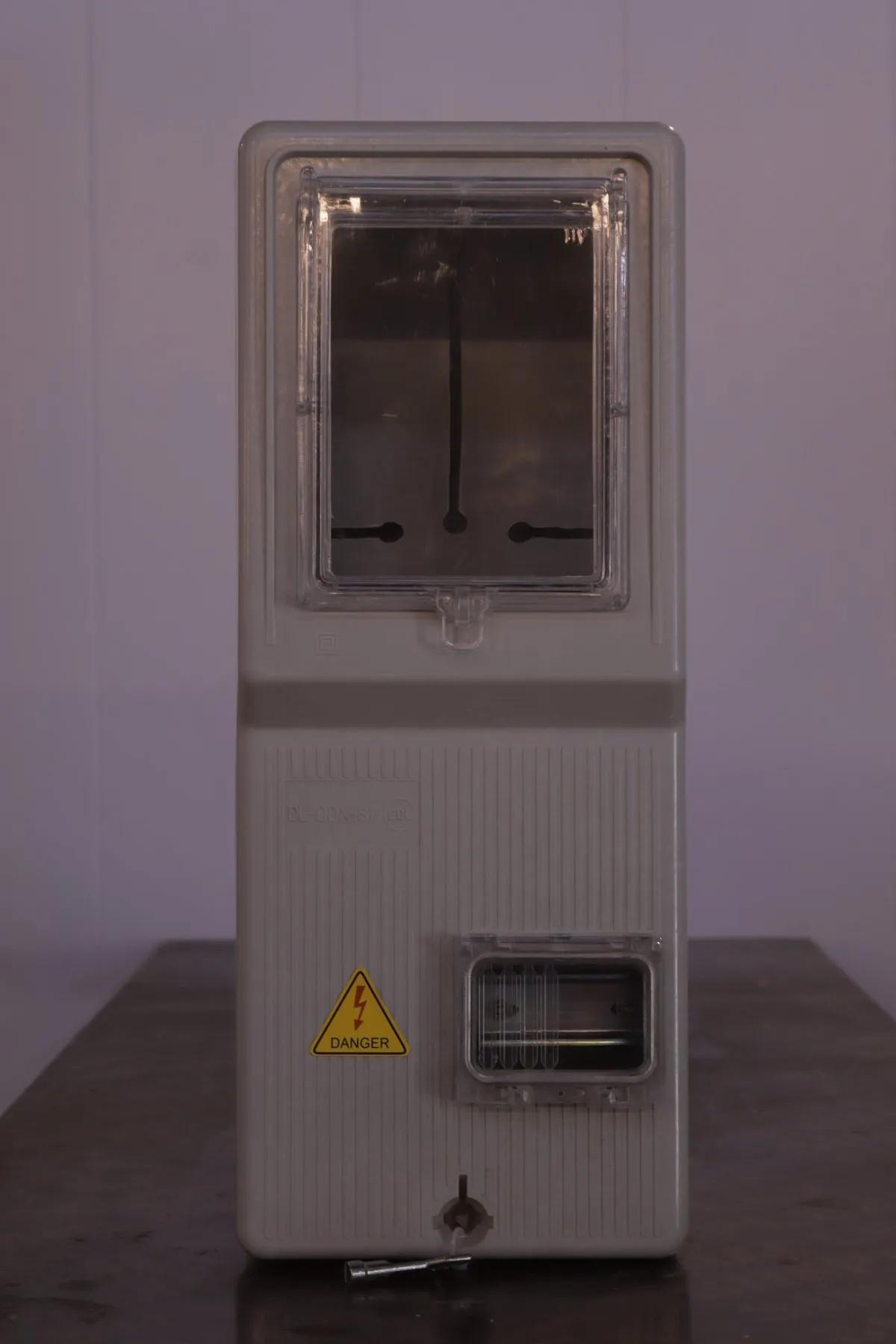
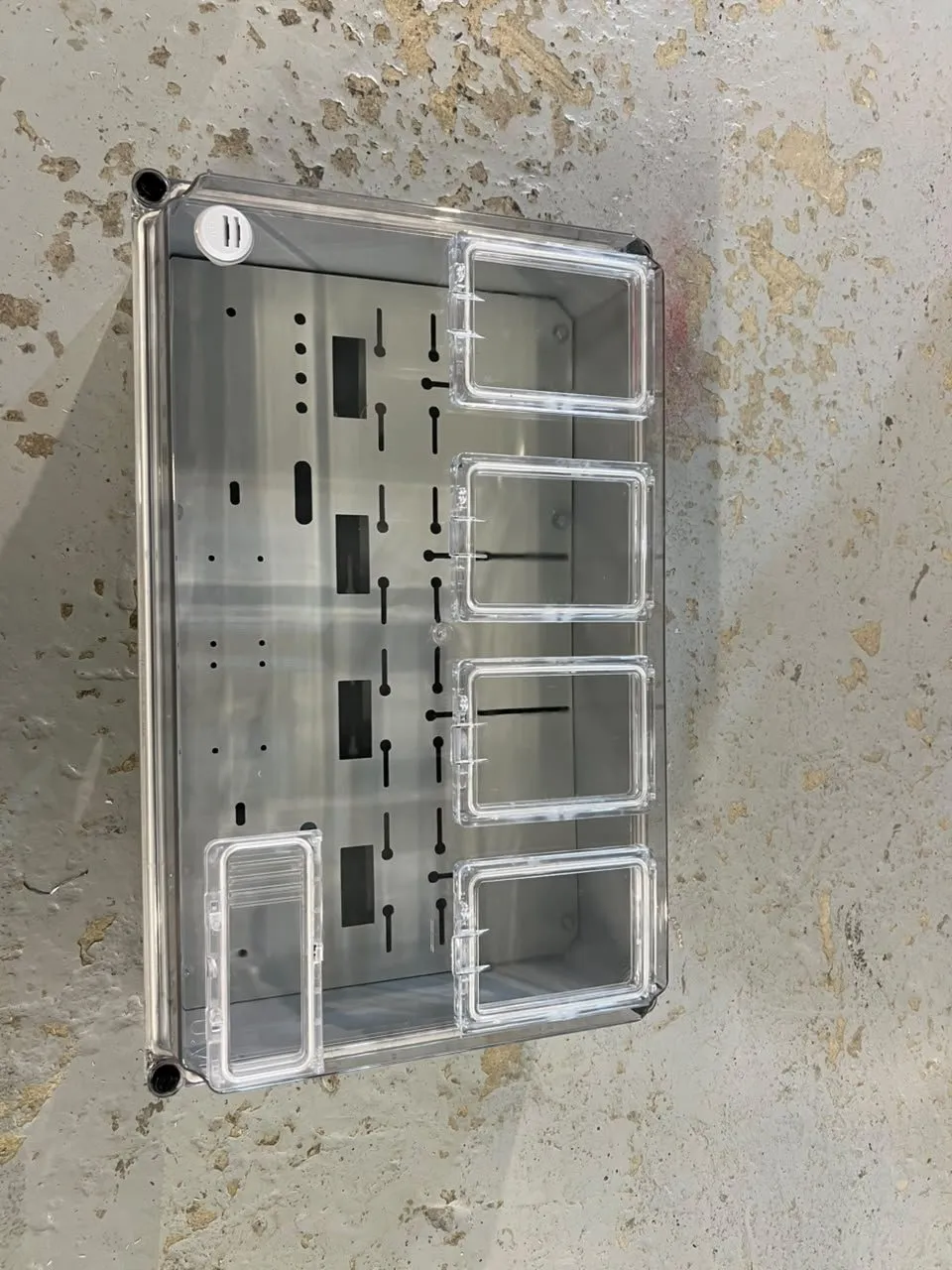
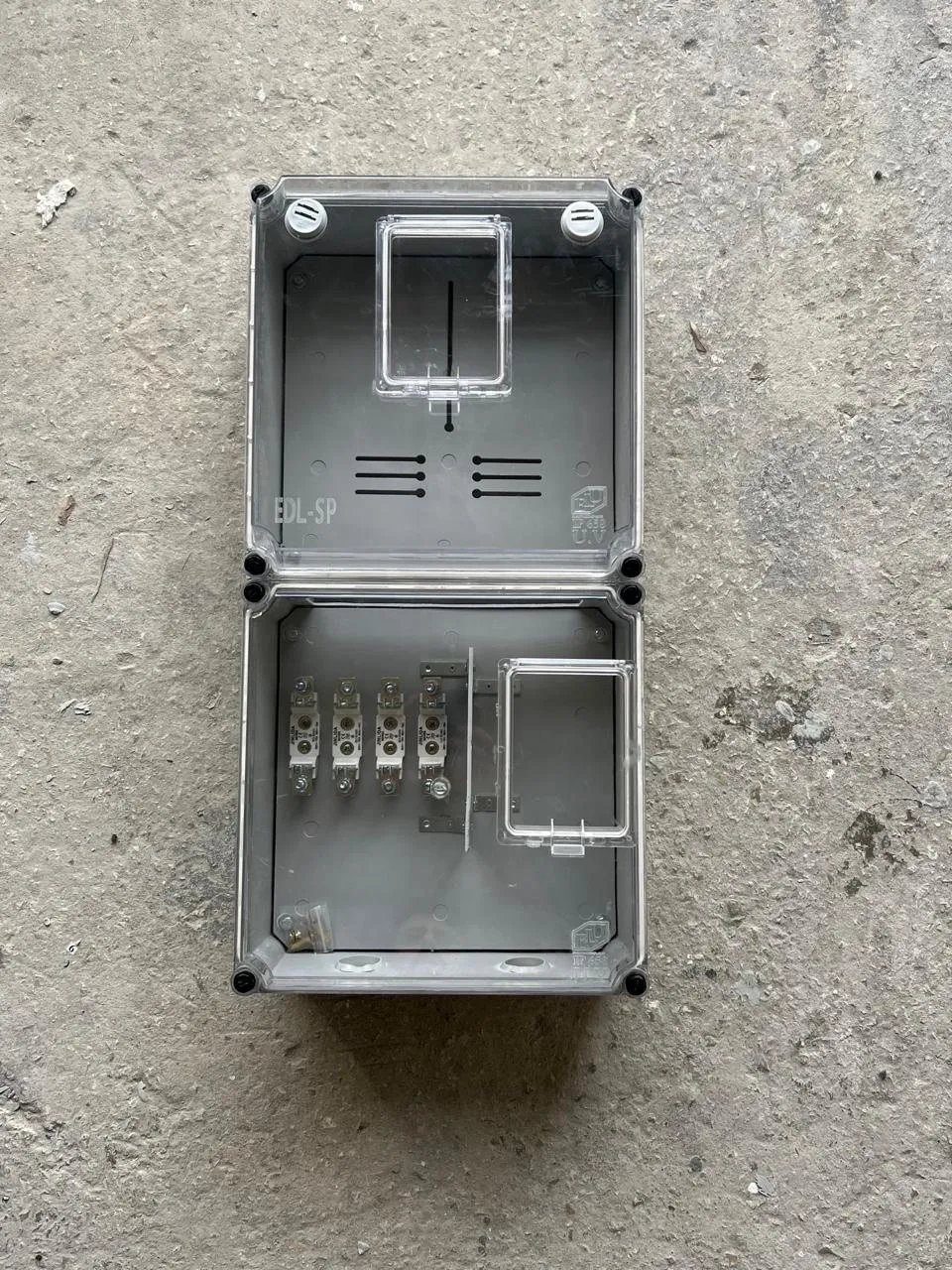
SARACO's ELU enclosure range is built around a set of standard modular box sizes that can be bolted together into larger configurations without new tooling. Every enclosure can be machined with circular, rectangular or custom openings in any position, and supplied as a complete assembly with hinges, locks, gaskets, windows and mounting plates. Our range also includes SMC meter enclosures designed to house multiple single-phase meters for utility networks.
Have a part in mind?
Talk to an expert