Manufacturing · · 6 min read
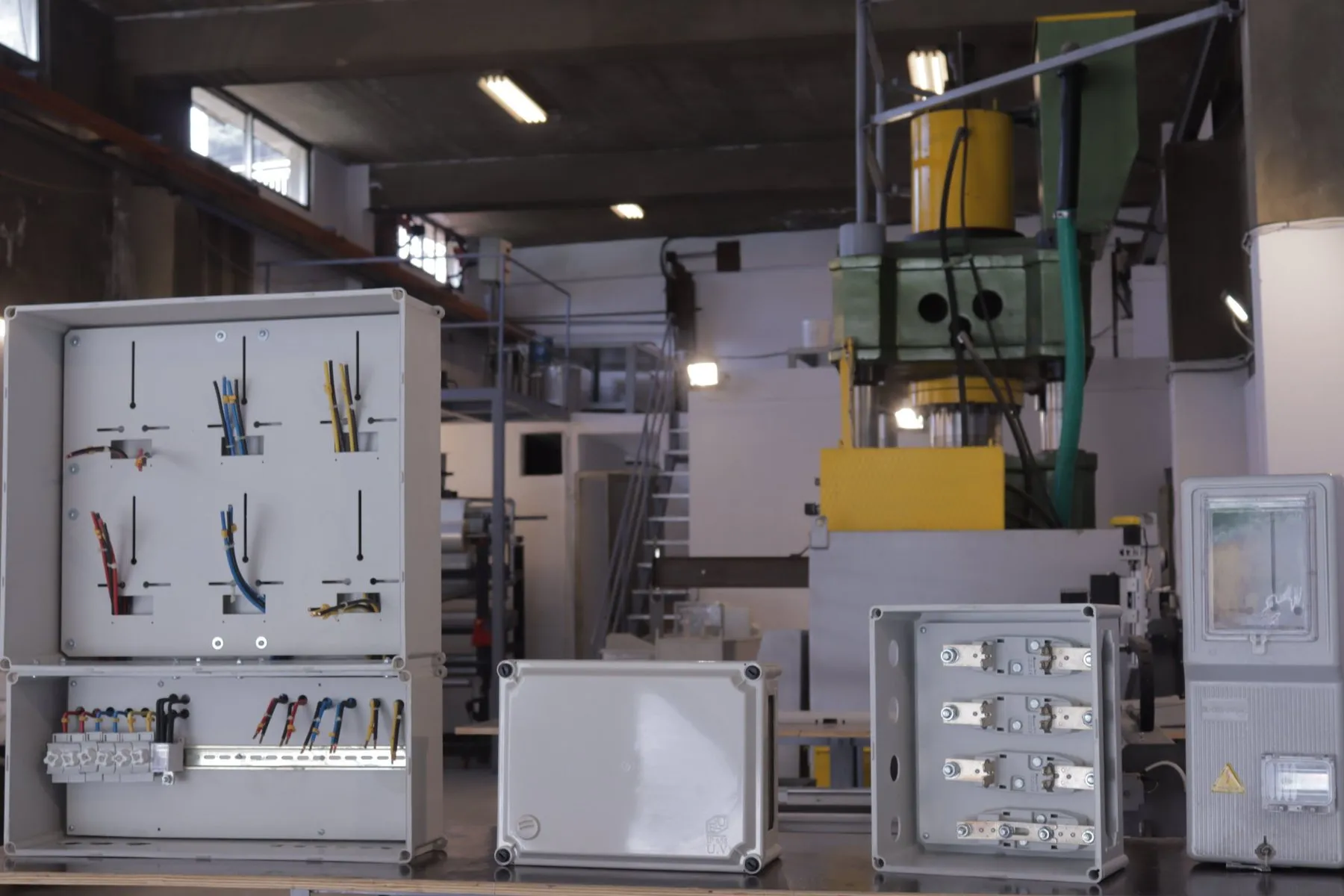
When customers hold one of our parts for the first time, a meter enclosure, a manhole cover or a custom housing, the first reaction is often surprise. It is lighter than they expected, more rigid than they expected, and the finish is smooth and consistent from one piece to the next.
That consistency is not an accident. It is the result of a controlled process with five stages: SMC mixing, compression molding, machining, assembly, and quality control. In this article we take you through each stage on our production floor and explain why it matters for the part you receive.
What is SMC?
SMC stands for Sheet Molding Compound. It is a ready-to-mold composite material made of four main ingredients:
- Thermoset resin (usually unsaturated polyester), which binds everything together and gives chemical resistance.
- Chopped glass fibers, which provide strength and stiffness.
- Mineral fillers, which add body, dimensional stability and fire performance.
- Additives: catalysts that trigger curing, pigments for color, release agents, thickeners and, where needed, UV stabilizers and flame retardants.
The beauty of SMC is that each of these can be tuned. A part that must survive years of sun gets a different formulation from one that must carry 40 tonnes of traffic or resist fire inside an electrical room.
Stage 1: SMC mixing
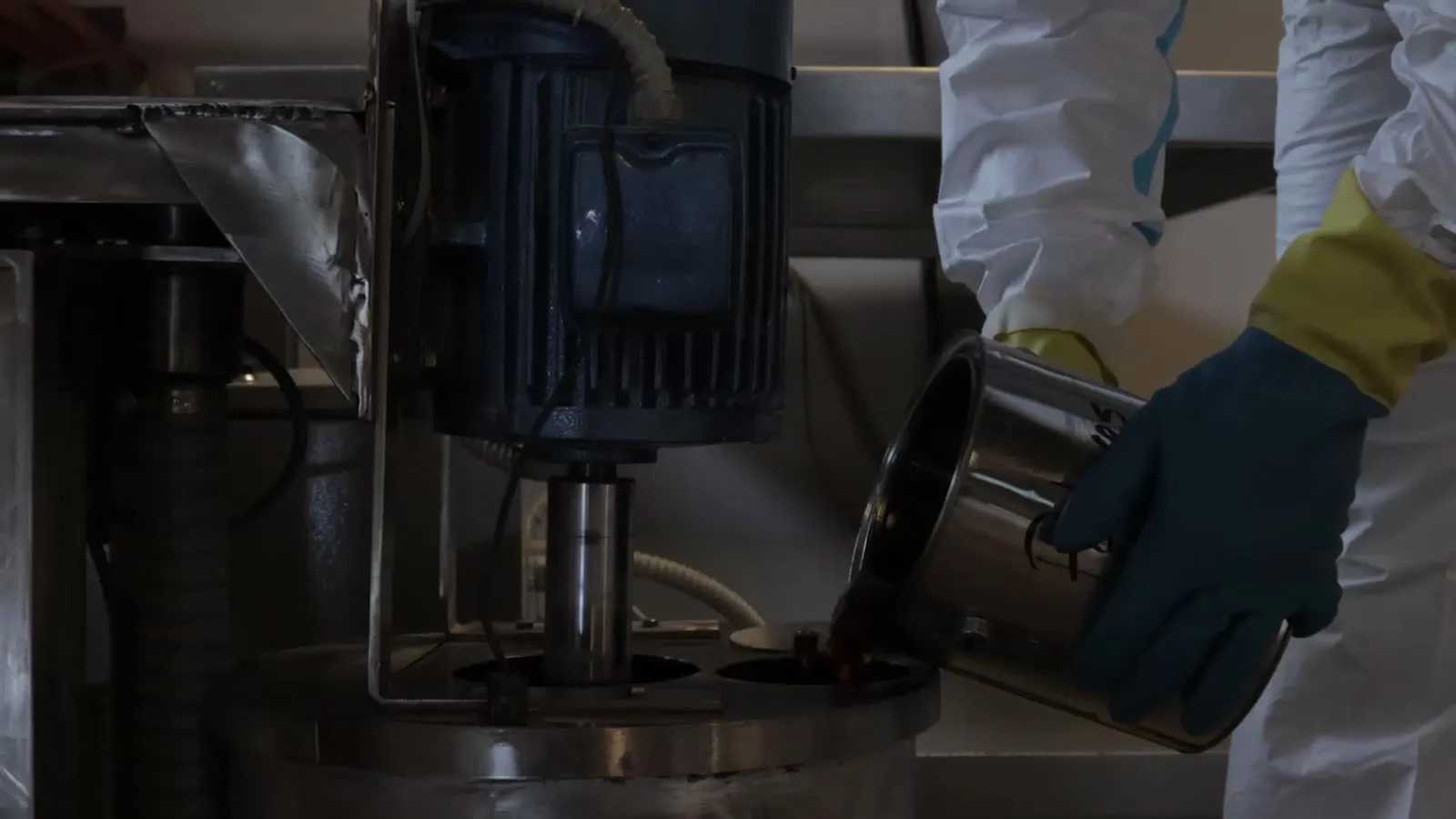
Everything starts with the paste. Resin, fillers and additives are weighed precisely and mixed into a uniform, smooth paste. Accuracy here is critical: a small change in catalyst or filler ratio changes how the part cures, how it flows in the mold, and how it performs in service.
The paste is then spread onto a carrier film, and chopped glass fibers are distributed evenly over it. A second layer of paste and film closes the sandwich, and the material passes through compaction rollers that drive the resin into the glass and squeeze out trapped air.
The resulting sheet is rolled up and left to mature under controlled conditions. During maturation, the paste thickens from a liquid to a leather-like consistency that can be handled, cut and loaded into a mold, while still flowing perfectly once heat and pressure are applied.
Stage 2: Compression molding
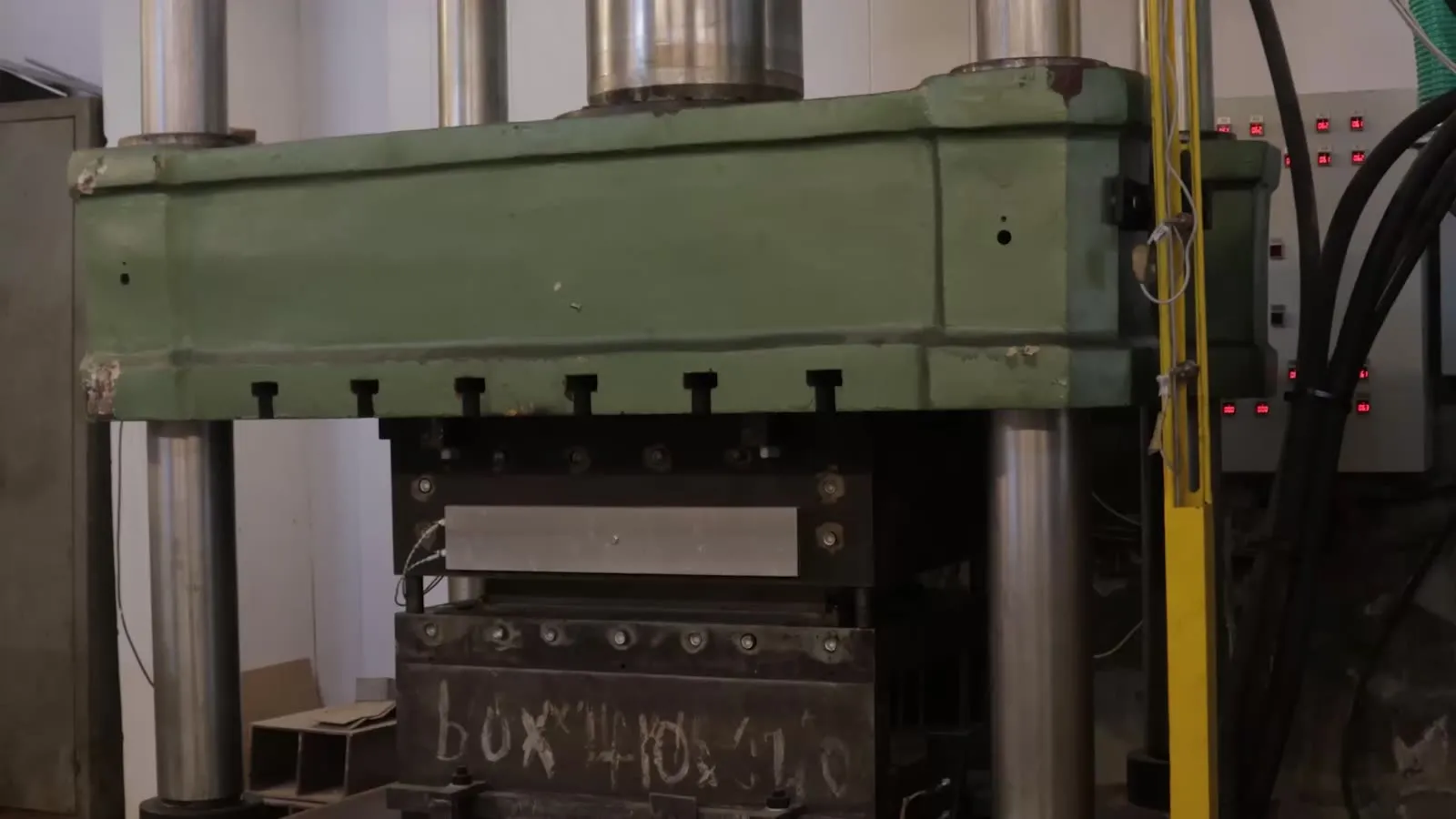
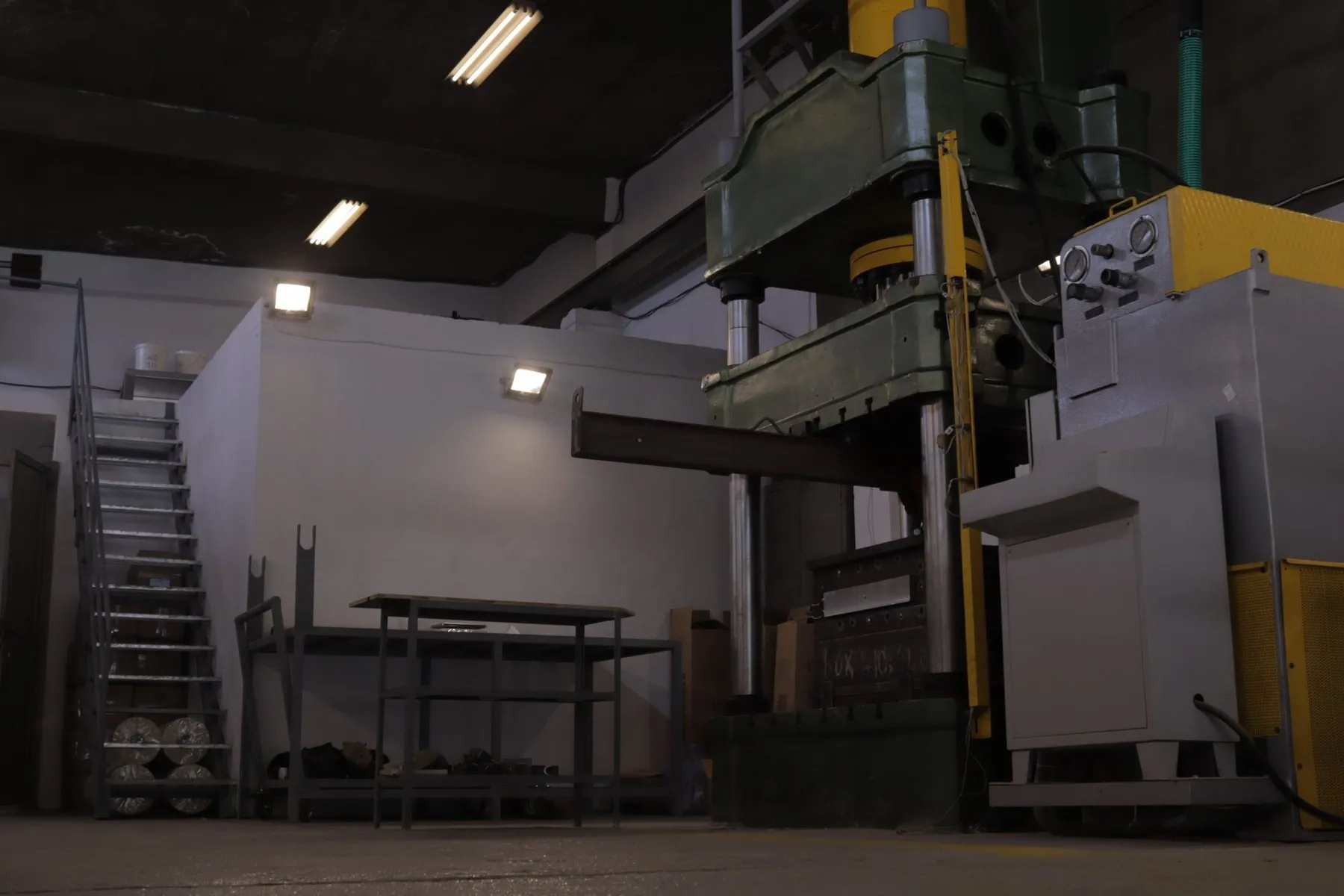
This is the heart of the process. The matured SMC sheet is cut into pieces of a precise weight and stacked into a “charge”. The charge is placed into a heated steel mold mounted in a hydraulic press.
The press closes, and under high pressure and temperature the SMC flows to fill every corner of the mold cavity: ribs, bosses, logos, textures and edges. The heat triggers the curing reaction, and within minutes the material transforms permanently from a soft sheet into a rigid, solid part. The mold opens, and the finished part is removed.
Compression molding has clear advantages over other ways of making fiberglass parts:
- Repeatability. Every part comes from the same steel mold, under the same pressure, temperature and time. Part 1 and part 10,000 are the same.
- Two finished surfaces. Unlike hand lay-up, both sides of the part are formed against the mold, so both are clean and accurate.
- Complex geometry in one shot. Ribs, mounting points, hinges and text are molded in, which reduces secondary work.
- Short cycle times, which makes it the right process for volume production.
- Dense, void-free parts thanks to the pressure, which gives better mechanical strength.
Stage 3: Machining
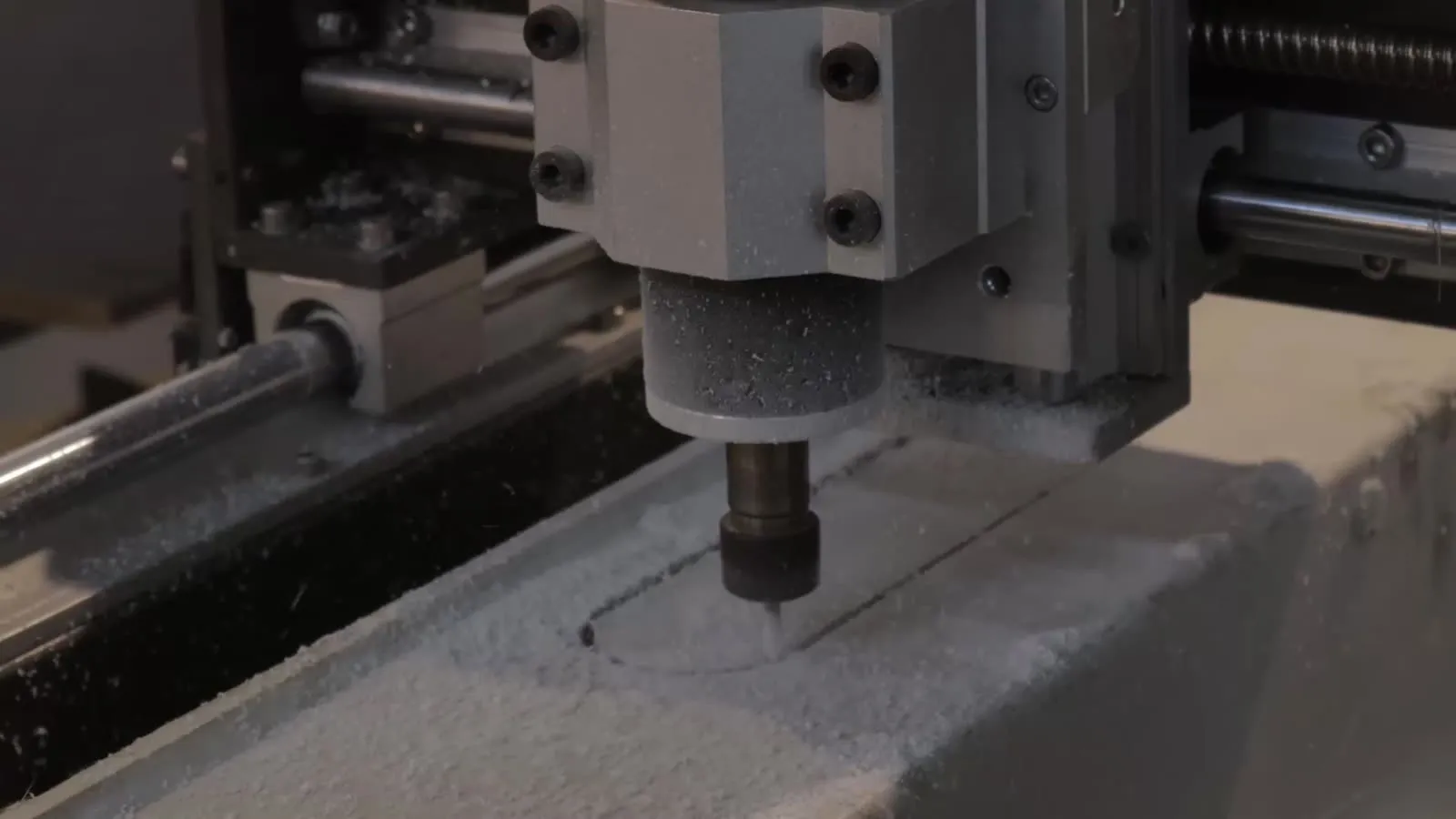
Many parts need features that are best added after molding: cable entries, mounting holes, cut-outs for windows, glands or switches, and edge finishing.
At this stage, parts are deburred to remove the thin flash that forms along the mold parting line, and then drilled, cut or routed to the customer's specification. This is where a standard molded enclosure becomes a custom one: a circular opening here, a rectangular cut-out there, placed exactly where the project requires.
Machining fiberglass correctly takes the right tools and technique. Done badly, it can chip edges or expose fibers. Done well, it leaves clean, precise openings that maintain the part's strength and its IP sealing performance.
Stage 4: Assemblies
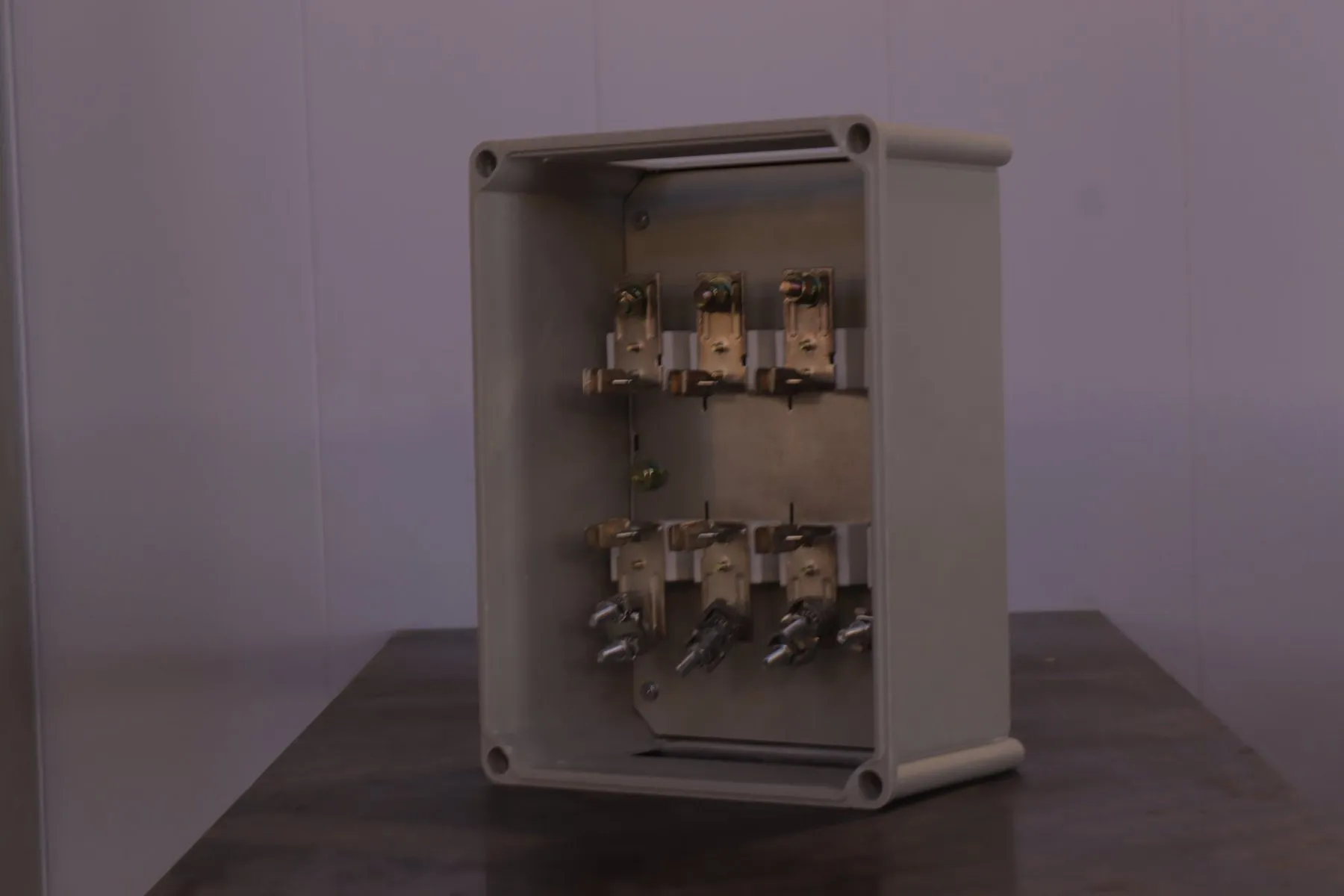
Few customers need just a bare molded shell. They need a product ready to install. Our assembly stage turns molded and machined parts into complete units, which can include:
- Hinges, locks and latches
- Sealing gaskets for dust and water protection
- Transparent inspection windows
- Mounting plates, DIN rails and internal brackets
- Metal inserts and fasteners
- Bolting several modular boxes together into one larger configuration
For our enclosure customers, this is often where we add the most value. Rather than shipping parts that the customer must then fit out, we deliver assemblies built to their project specification, ready for their electricians or installers.
Stage 5: Quality control
Quality is not a single check at the end of the line. It runs through every stage:
- Incoming materials are checked before they enter production.
- SMC batches are monitored for weight, glass distribution and maturation before molding.
- Molding parameters (temperature, pressure and cure time) are controlled and recorded.
- Finished parts are inspected visually and dimensionally for surface defects, warping, incomplete filling and fit.
- Functional tests are carried out according to the product: fit and sealing checks for enclosures, and load testing against the relevant standard for infrastructure products such as manhole covers.
Every part that leaves SARACO has passed through these checkpoints, and any part that does not meet specification does not ship.
Why one roof matters
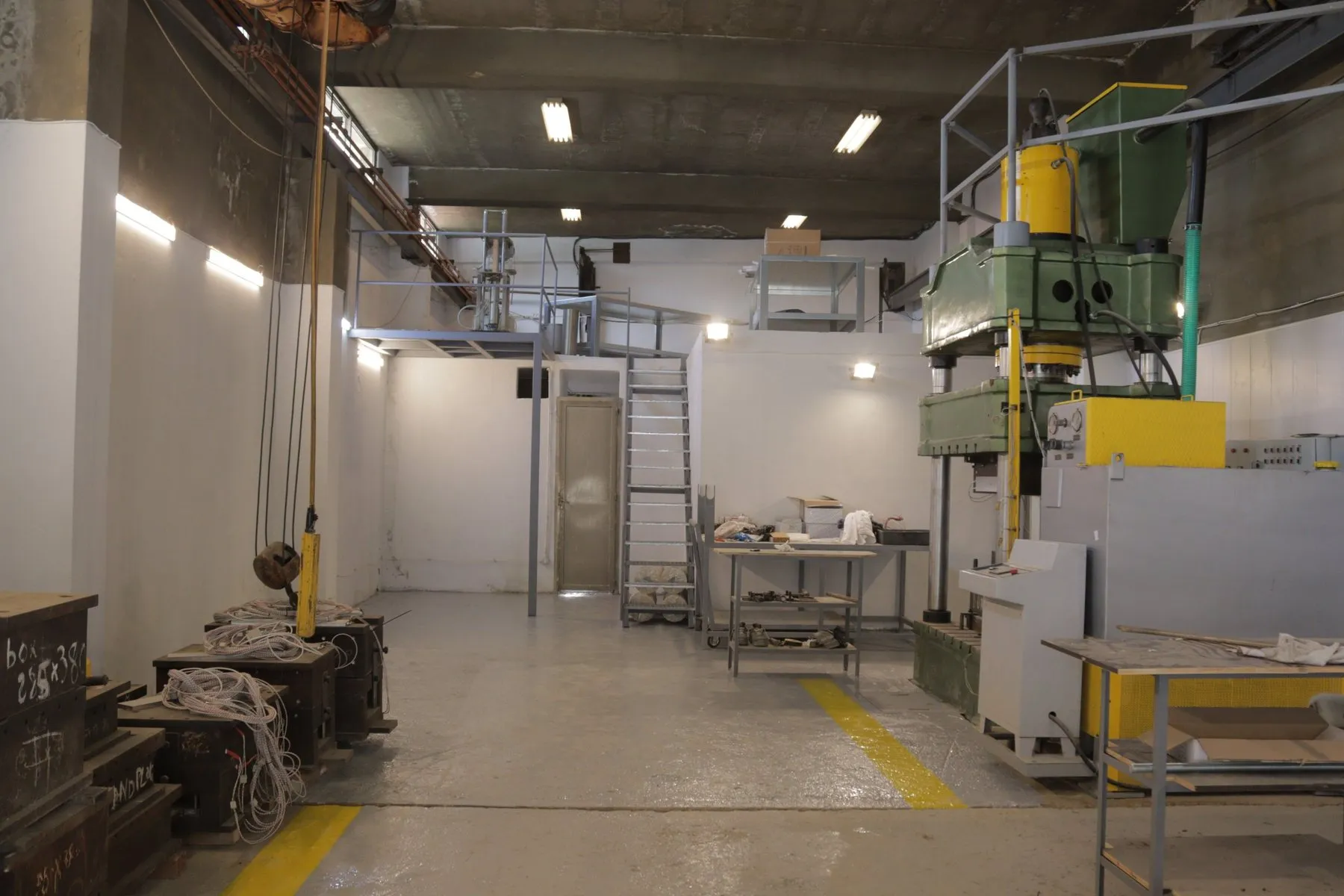
Many suppliers handle only one or two of these stages and outsource the rest. At SARACO, material, molding, machining, assembly and inspection happen under one roof in Lebanon. That gives our customers three concrete benefits:
- 01Consistency, because one team owns the result from raw material to finished product.
- 02Speed, because there is no waiting on outside suppliers between steps.
- 03Flexibility, because changes to a design, an opening or an assembly can be made quickly and locally.
Have a part in mind?
Talk to an expert